
Environmental Impact of Solar Energy: How Going Solar Helps
Solar energy is often promoted for one simple reason: it can reduce electricity bills. But the benefits of going solar extend well beyond monthly savings.
By generating electricity from sunlight instead of relying entirely on grid power, a rooftop solar system can help reduce the emissions associated with electricity generation, lower dependence on fossil-fuel-based power, and contribute to a cleaner energy mix.
For homeowners and businesses considering solar panel installation, understanding the environmental impact is just as important as understanding the financial return.
This guide looks at how solar energy affects carbon emissions, air pollution, natural resources, and long-term sustainability, while also addressing an important question: Are solar panels completely pollution-free?
The answer is more nuanced than a simple yes or no.
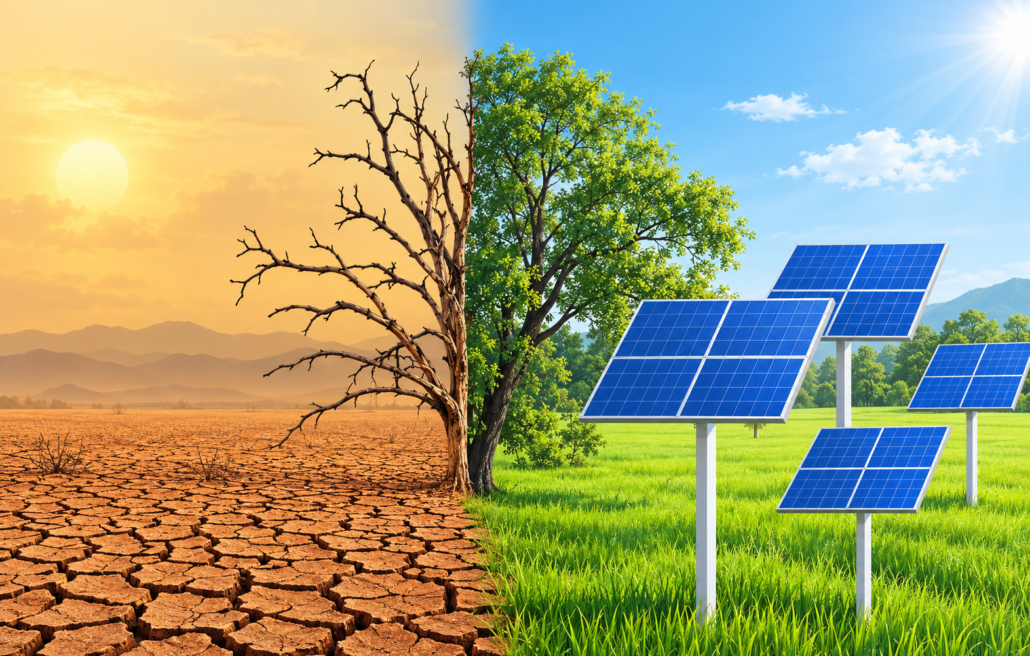
What Is the Environmental Impact of Solar Energy?
Solar photovoltaic (PV) systems generate electricity without burning coal, oil, or natural gas during operation.
This means a rooftop solar system does not require ongoing fuel combustion to produce electricity.
The environmental benefits primarily come from replacing electricity that would otherwise be generated from higher-emission sources.
The International Energy Agency estimates that solar PV deployment globally avoided around 1.5 gigatonnes of CO₂ emissions in 2025 alone, making solar PV the largest contributor among the clean technologies assessed in its 2026 Global Energy Review.
For an individual home or business, the impact is much smaller, of course. But when thousands or millions of systems operate together, the cumulative effect becomes significant.
How Does Going Solar Reduce Carbon Footprint?
Your electricity has an environmental footprint depending on how that electricity is generated.
When electricity comes from fossil-fuel-based generation, producing it generally involves releasing greenhouse gases.
Solar panels work differently.
Once installed, a solar PV system generates electricity from sunlight without directly producing combustion-related CO₂ during operation.
The basic cycle is simple:
Sunlight → Solar Panels → Electricity → Home/Business
Instead of:
Fossil Fuel → Power Plant → Combustion → Electricity + Emissions
This difference is one of the biggest environmental advantages of rooftop solar.
Solar Energy vs Fossil-Fuel Electricity: Carbon Footprint
It is important to distinguish between operational emissions and lifecycle emissions.
Solar panels do have an environmental footprint because energy and materials are required to manufacture, transport, install, maintain, and eventually recycle them.
However, lifecycle assessments consistently show that solar PV produces substantially lower greenhouse-gas emissions per unit of electricity than fossil-fuel generation. The IPCC reports that solar PV lifecycle emissions are far below those of fossil generation, although the exact figure varies according to technology, manufacturing processes, and electricity sources used during production.
| Energy Source | Typical Lifecycle GHG Emissions* |
| Solar PV | Generally tens of gCO₂e/kWh |
| Natural Gas | Much higher than solar |
| Coal | Among the highest |
| Rooftop Solar During Operation | Essentially zero direct CO₂ from electricity generation |
Lifecycle figures vary considerably by technology, location, manufacturing process, and methodology. The IPCC notes recent solar PV estimates in the literature ranging from roughly 18–60 gCO₂/kWh in some studies, with wider historical ranges also reported.
So, while solar is not a zero-impact technology across its entire lifecycle, its carbon intensity is significantly lower than fossil-fuel electricity.
1. Solar Energy Helps Reduce Greenhouse Gas Emissions
The most important environmental benefit of solar energy is its potential to reduce greenhouse gas emissions.
Every unit of electricity generated by a rooftop solar system can reduce the amount of electricity that needs to be supplied from the grid.
The actual emissions avoided depend on the electricity generation mix being displaced.
For example, a solar system operating in a grid with a relatively high share of fossil-fuel generation can potentially avoid more emissions than the same system operating in a grid dominated by low-carbon electricity.
This makes solar power and carbon reduction closely connected.
2. Solar Can Reduce Dependence on Fossil Fuels
Coal, oil, and natural gas remain important sources of energy around the world.
Generating electricity from these fuels requires extraction, transportation, processing, and combustion.
Solar PV does not require a continuous fuel supply once the system is installed.
The sunlight is free, renewable, and available every day.
This gives solar an important environmental advantage:
The fuel doesn’t need to be mined, drilled, transported, or burned.
The IEA estimates that solar PV deployment since 2019 has helped avoid substantial fossil-fuel demand globally, with solar making the largest contribution among the clean technologies assessed in its 2026 analysis.
3. Solar Energy Helps Reduce Air Pollution
Carbon dioxide is not the only environmental concern associated with conventional electricity generation.
Combustion of fossil fuels can also contribute to emissions of pollutants such as:
- Sulphur dioxide
- Nitrogen oxides
- Particulate matter
- Other combustion-related pollutants
Rooftop solar generates electricity without combustion at the point of generation.
Therefore, replacing some fossil-fuel-generated electricity with solar can help reduce the emissions associated with conventional electricity production.
This makes solar energy a cleaner electricity source from an air-pollution perspective.
4. Solar Panels Generate Electricity Without Burning Fuel
A conventional thermal power plant requires fuel to continuously produce electricity.
A solar PV system doesn’t.
Once the panels are installed, sunlight is converted directly into electricity through the photovoltaic effect.
There is no combustion process involved. This is particularly important over a solar system’s long operating life.
A properly maintained solar installation can continue generating electricity for 25 years or more, meaning its environmental benefits accumulate over decades.
5. Solar Has a Relatively Low Lifecycle Carbon Footprint
One common misconception is:
“Solar panels create pollution when they are manufactured, so they aren’t actually clean.”
There is some truth behind the first part.
Manufacturing solar panels requires:
- Silicon and other materials
- Energy
- Industrial processing
- Transportation
- Manufacturing infrastructure
Therefore, solar panels are not completely impact-free.
But evaluating environmental impact requires looking at the entire lifecycle rather than only the manufacturing stage.
The IEA reports that solar PV manufacturing has become substantially less emissions-intensive over time and estimates that modern panels can recover the emissions associated with their manufacture relatively quickly. Its analysis found that solar panels generally need only around 4–8 months of operation to offset manufacturing emissions, compared with an average panel lifetime of around 25–30 years.
That means most of a panel’s operating life can be spent generating electricity with a comparatively low lifecycle carbon footprint.
6. Solar Energy Requires No Fuel During Operation
This is an often-overlooked environmental advantage.
Once a rooftop solar system is operational, there is no recurring fuel requirement.
You don’t need to:
- Purchase coal
- Extract natural gas
- Transport fuel
- Burn fuel to generate electricity
The primary energy source is sunlight.
This makes solar particularly attractive as part of a long-term transition toward renewable electricity.
7. Rooftop Solar Makes Better Use of Existing Space
Large-scale infrastructure can involve land-use considerations.
Rooftop solar offers an important alternative because it uses existing built surfaces. Homes, factories, warehouses, offices, schools, and commercial buildings can use their rooftops to generate electricity without necessarily requiring additional land for a separate solar power plant.
The IPCC identifies smart land-use decisions as one of the important ways to minimise the environmental impacts associated with solar PV deployment.
For cities such as Chennai, this makes rooftop solar particularly relevant.
8. Solar Can Reduce the Environmental Impact of Electricity Consumption
Think about a typical household.
It may use electricity for:
- Air conditioning
- Refrigeration
- Lighting
- Water heating
- Fans
- Washing machines
- Computers
- Other appliances
The household’s electricity demand doesn’t disappear when solar is installed.
Instead, part of that demand can be met by electricity generated directly from sunlight. This means solar doesn’t necessarily mean using less electricity.
It means changing where that electricity comes from.
That distinction is important.
9. Solar Energy and Water Use
Water is another important consideration when comparing electricity technologies. Some conventional thermal power plants require significant amounts of water for cooling.
Solar PV electricity generation does not require cooling water in the same way because it does not rely on steam-driven thermal generation.
However, solar panels may require some water for cleaning, particularly in dusty environments.
For rooftop systems in Chennai and Tamil Nadu, regular cleaning can help maintain energy generation because dust, pollution, and other deposits can reduce the amount of sunlight reaching the photovoltaic cells. So solar PV is not completely water-free, but its operational water requirements are generally limited compared with many conventional thermal electricity-generation technologies.
10. Solar Panels Can Support a More Sustainable Energy Future
The environmental value of solar becomes even greater when it is combined with other clean-energy technologies.
For example:
Solar + Battery Storage
Solar generates electricity during daylight hours, while batteries can store excess electricity for later use.
Solar + Energy-Efficient Appliances
Using efficient air conditioners, refrigerators, lighting, and other equipment can reduce total electricity demand.
Solar + EV Charging
Solar-generated electricity can also be used to support electric vehicle charging, potentially increasing the share of renewable electricity in transportation.
Together, these technologies can help create a more efficient and lower-carbon energy system.
Is Solar Energy Completely Environmentally Friendly?

No.
This is an important distinction.
Solar energy is cleaner and lower-carbon than fossil-fuel electricity, but solar panels still have environmental impacts throughout their lifecycle.
These can include:
- Mining and processing of raw materials
- Energy used during manufacturing
- Manufacturing-related emissions
- Transportation
- End-of-life waste
- Recycling requirements
- Land-use considerations for large solar projects
The IPCC specifically highlights recycling and responsible land-use decisions as important ways to reduce solar PV’s environmental impacts.
The right conclusion isn’t that solar has zero environmental impact.
The more accurate conclusion is:
Solar can provide electricity with substantially lower lifecycle greenhouse-gas emissions than fossil-fuel generation.
Solar Energy’s Environmental Benefits Over 25+ Years
The long operating life of solar panels is an important part of their environmental value.
Consider a professionally designed rooftop system operating for 25 years.
During that period, it can:
- Generate electricity every year
- Avoid some grid electricity consumption
- Reduce dependence on fossil-fuel-based generation
- Produce electricity without direct combustion emissions
- Continue delivering environmental benefits after its initial manufacturing footprint has been offset
This is why solar panel lifespan and environmental impact should be considered together.
How Much Carbon Can a Rooftop Solar System Avoid?
There is no single number that applies to every solar installation.
The amount of CO₂ avoided depends on:
- System capacity
- Annual electricity generation
- Local solar conditions
- Grid electricity mix
- How much solar electricity actually displaces grid electricity
- System operating life
A simplified calculation is:
Annual CO₂ avoided ≈ Solar electricity generated × Grid emissions factor
For example, if a solar system generates 5,000 kWh per year, and the displaced electricity has an emissions factor of 0.7 kg CO₂/kWh, the avoided emissions would be approximately:
5,000 × 0.7 = 3,500 kg CO₂ per year
That’s approximately 3.5 tonnes of CO₂ per year.
This is an illustrative calculation rather than a universal figure. Actual results should use the applicable electricity emissions factor and the system’s measured generation.
Solar Environmental Impact: Key Numbers at a Glance
| Factor | Solar PV |
| Direct CO₂ during electricity generation | Essentially zero |
| Fuel Required during operation | No |
| Lifecycle emissions | Low compared with fossil generation |
| Typical panel operating life | 25 – 30+ years |
| Manufacturing emissions | Yes |
| Operational air pollution | No combustion-related emissions |
| Operational water requirement | Low; cleaning may require water |
| End-of-life consideration | Recycling and responsible disposal |
| Land requirement for rooftop systems | Uses existing roof space |
The important takeaway is that “clean energy” doesn’t mean “zero environmental impact.” It means the overall environmental footprint can be substantially lower than conventional fossil-fuel-based electricity.
Conclusion: Going Solar Is an Investment in Cleaner Energy
Solar energy isn’t completely without environmental impact. Manufacturing, transportation, material extraction, and end-of-life management all matter.
But when the full lifecycle is considered, solar PV produces substantially fewer greenhouse-gas emissions per unit of electricity than fossil-fuel generation. And because solar panels can operate for decades, the environmental benefits can continue long after the initial manufacturing footprint has been offset.
For homeowners and businesses, going solar therefore isn’t only about reducing the electricity bill.
At Soltrix Energy Solar, we design professionally engineered rooftop solar systems for homes, businesses, and commercial properties across Chennai and Tamil Nadu.
Our approach considers:
- Electricity consumption
- Rooftop suitability
- System capacity
- Solar generation potential
- Component quality
- Long-term system performance
A properly designed solar system can help you work toward both lower electricity costs and a lower carbon footprint.


Leave a Reply
Want to join the discussion?Feel free to contribute!