
Solar Panel Subsidy in Tamil Nadu: Government Benefits Available for Rooftop Solar
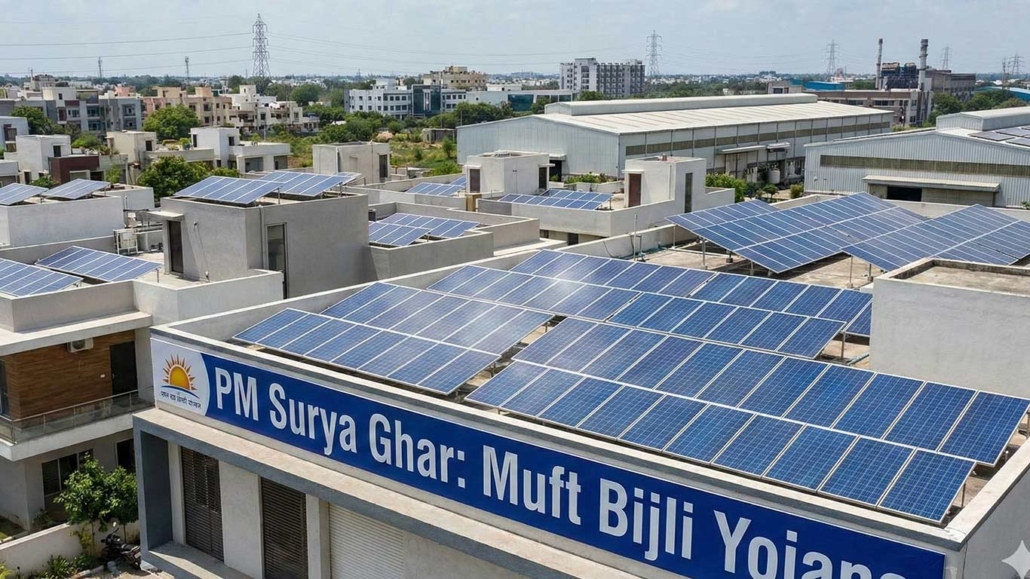
Rooftop solar adoption is growing steadily across Tamil Nadu, especially in cities like Chennai, Coimbatore, and Madurai.
One of the biggest reasons behind this growth is government-backed financial support that makes solar more affordable.
If you’re planning solar, a key question is:
What government subsidies are available for solar panels in Tamil Nadu?
Here’s a clear breakdown of the benefits currently available.
Central Government Solar Subsidy
Residents of Chennai and Tamil Nadu are eligible for rooftop solar subsidy under national programs managed by the Ministry of New and Renewable Energy (MNRE).
This applies mainly to:
- Residential rooftop solar systems
- Grid-connected (on-grid) installations
The subsidy helps reduce the upfront investment required for installing rooftop solar.
PM Surya Ghar Rooftop Solar Scheme
Homeowners in Chennai and Tamil Nadu can benefit from the PM Surya Ghar scheme, which promotes solar adoption for households.
Currently, the subsidy structure is:
- Up to 2 kW system → ₹30,000 per kW
- Additional capacity up to 3 kW → ₹18,000 per kW
- Group Housing Societies/RWA: ₹18,000 per kW for common facilities up to 500 kW (capped at 3 kW per house)
This means:
- 1 kW system → ₹30,000 subsidy
- 2 kW system → ₹60,000 subsidy
- 3 kW system → ₹78,000 subsidy
For systems larger than 3 kW (such as 4kW, 5kW, etc.), the subsidy remains capped at:
Maximum ₹78,000 for residential installations
Role of TANGEDCO
In Tamil Nadu, rooftop solar installations are integrated with the grid through TANGEDCO.
While TANGEDCO does not directly provide a subsidy, it enables:
- Net metering approval
- Grid connectivity
- System inspection
These are essential for availing financial benefits.
Net Metering in Tamil Nadu
Net metering is one of the most valuable financial advantages available.
It allows:
- Export of excess solar power to the grid
- Adjustment of energy credits against EB consumption
- Lower electricity bills over time
For many homeowners, this significantly improves the return on solar investment.
Who Is Eligible for a Subsidy?
Typically, eligibility includes:
- Individual homeowners
- Residential rooftop installations
- Systems installed through approved vendors
Key benefits include:
- Financial support for rooftop solar
- Reduced system cost
- Support for smaller residential installations
Commercial systems generally rely more on financial benefits, such as net metering, rather than direct subsidies.
Application Process in Tamil Nadu
The process usually involves:
- Selecting an authorised solar installer
- Submitting documents to apply for a subsidy
- Installing the solar system
- TANGEDCO inspection and approval
Once verified, the subsidy is credited as per program guidelines.
Why Proper System Design Matters

To qualify for a subsidy and ensure approval, systems must meet:
- Technical standards
- Safety compliance
- Installation norms
Professional planning helps avoid delays or rejections.
Planning Solar in Tamil Nadu
At Soltrix Energy Solar, we assist homeowners with:
- Evaluating subsidy eligibility
- Designing compliant rooftop solar systems
- Supporting approvals and net metering
This helps maximise the financial benefits available in Tamil Nadu.
Moving Towards Solar with Government Support
Government subsidy, net metering, and supportive policies make rooftop solar more accessible for households in Chennai and across Tamil Nadu.
Understanding these benefits is the first step toward adopting reliable and cost-effective clean energy.
If you’re planning a solar installation in Chennai or anywhere in Tamil Nadu, connect with Soltrix Energy Solar today to understand the right solution, available subsidy assistance, the expected solar setup cost, and the long-term benefits for your property.


Leave a Reply
Want to join the discussion?Feel free to contribute!